How Much Deep Sleep Do You Need? What the Evidence Says
Why there's no single magic number for deep sleep, how it varies with age and individual differences, and better ways to judge whether you're getting enough.
It’s one of the most searched questions about sleep, and often the first thing people ask after seeing a low number on a sleep tracker: how much deep sleep do I actually need? The honest answer is less satisfying than a single figure, but more useful. Deep sleep varies a lot between people and across a lifetime, and there’s no official target for it the way there is for total sleep.
This guide explains what we do know, why “normal” is a wide range, and better ways to judge whether your sleep is working for you.
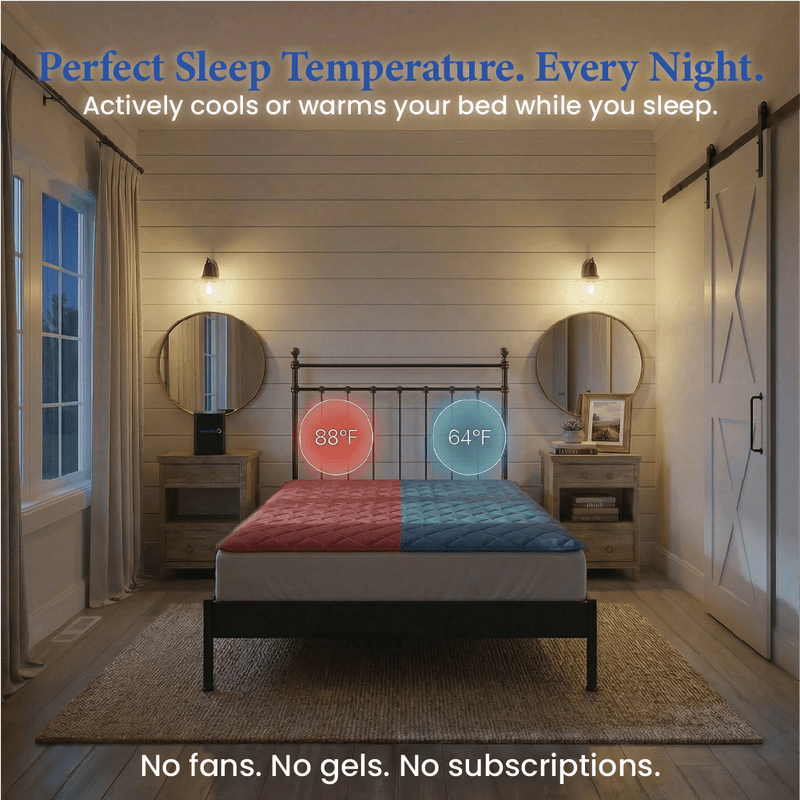
Good Sleep cooling and heating mattress topper
A water-based mattress topper that cools to 62°F and heats to 110°F and fits on top of the mattress you already have. Simple touch-panel control with no app, Wi-Fi or subscription. Dual zone on King.
Shop nowWho this guide is for
This guide is for anyone who has wondered whether they’re getting enough deep sleep, especially if a sleep tracker has given you a number that worries you. It’s also useful if you wake up tired and are trying to work out why. For the basics, start with what is deep sleep.
Start with total sleep
Public health organisations give recommendations for total sleep, not for individual stages. For most adults, the recommendation is at least seven hours a night. Children and teenagers need more.
| Age group | General recommendation for total sleep |
|---|---|
| School-age children | Roughly 9 to 12 hours |
| Teenagers | Roughly 8 to 10 hours |
| Adults | At least 7 hours |
| Older adults | Around 7 to 8 hours is often suggested |
These ranges are based on guidance from bodies such as the American Academy of Sleep Medicine and the CDC. Getting enough total sleep on a regular schedule is the most reliable way to give your body the chance to get the deep sleep it needs.
Why there’s no single deep sleep target
Deep sleep makes up a minority of the night for most adults, but the amount varies widely. Things that affect it include:
- Age. Deep sleep is highest in childhood and declines through adulthood. See deep sleep and age.
- Individual differences. Two healthy people of the same age can have quite different amounts.
- Sleep pressure. After a long day or a short night, the body tends to produce more deep sleep.
- How it’s measured. Sleep labs score stages from brain waves; consumer trackers estimate them, and the two can differ a lot.
- Health conditions and medicines, which can increase or reduce deep sleep.
Because of all this, a specific deep sleep figure on its own doesn’t tell you much about whether your sleep is healthy.
Better signs you’re getting enough
Instead of focusing on one number, look at how you feel and function:
- You usually wake up without feeling like you’ve been hit by a truck.
- You stay reasonably alert through the day without relying heavily on caffeine.
- You don’t fall asleep unintentionally in meetings, while reading or, most importantly, while driving.
- Your mood and concentration are generally steady.
- You can fall asleep within a reasonable time and don’t spend long periods awake at night.
If most of these are true, your sleep is probably working well, regardless of what a tracker says.
Signs your sleep might not be deep enough
On the other hand, some signs suggest your sleep isn’t as restorative as it could be:
- Waking up unrefreshed even after a full night.
- Frequent awakenings or very light, restless sleep.
- Loud snoring, gasping or pauses in breathing noticed by a partner.
- Morning headaches.
- Strong daytime sleepiness.
These can have many causes, including sleep apnea, pain, stress, alcohol and medicines. See why you wake up tired.
About trackers and “deep sleep scores”
Consumer sleep trackers estimate sleep stages using movement, heart rate and sometimes other signals. Studies comparing them with lab sleep studies have found they can be reasonable at telling sleep from wake but are less accurate at identifying specific stages. Deep sleep estimates in particular can be quite different from lab measurements.
That doesn’t make trackers useless. They can show trends over weeks and help you notice the effect of changes like alcohol or late nights. But one night’s deep sleep number shouldn’t be taken too seriously. See sleep trackers and deep sleep.
Can worrying about deep sleep make things worse?
Yes, it can. Researchers have described a pattern sometimes called “orthosomnia”, where people become so focused on achieving perfect tracker data that the anxiety itself makes sleep worse. If checking your sleep score makes you anxious, try putting the tracker away for a couple of weeks and judging your sleep by how you feel.
How to support healthy deep sleep
You can’t set a deep sleep target and hit it, but you can support it:
- Get enough total sleep on a regular schedule.
- Stay active during the day. See exercise and deep sleep.
- Keep the bedroom cool and dark. See temperature and deep sleep.
- Limit alcohol close to bed and caffeine later in the day.
- Avoid long, late naps, which reduce sleep pressure.
- Get any sleep disorder diagnosed and treated.
For a full plan, see how to get more deep sleep.
What about sleep calculators?
Online sleep calculators suggest bedtimes based on 90-minute cycles. They can be a useful rough guide, but real cycles vary in length from person to person and through the night, so don’t treat their timings as exact. A steady wake time and going to bed when sleepy is usually more reliable.
When to see a doctor
Talk to a doctor if:
- You feel very sleepy during the day despite enough time in bed.
- You snore loudly or someone has noticed pauses in your breathing.
- You’ve had trouble sleeping most nights for several weeks.
- Your sleep changed after starting a new medicine.
A doctor may suggest a sleep study, which measures sleep stages properly using brain wave recordings.
Common myths
“You need two hours of deep sleep a night.” You’ll often see specific figures quoted online, but there’s no official deep sleep target, and the normal range is wide.
“Low deep sleep on my tracker means I’m unhealthy.” Tracker estimates can be inaccurate, and healthy people vary a lot. How you feel is more informative.
“You can store up deep sleep.” Sleeping a lot one night doesn’t bank deep sleep for later nights.
“Older adults should have as much deep sleep as young adults.” Declining deep sleep is a normal part of ageing.
A simple two-week check
If you’re unsure whether you’re getting enough sleep overall:
- Set a fixed wake time and keep it every day for two weeks.
- Go to bed when you feel sleepy, allowing at least seven hours.
- Each morning, note how long you think you slept and rate how rested you feel from one to five.
- Each afternoon, note whether you felt drowsy.
At the end, look at the pattern. If you feel well on most days, your sleep is probably fine. If you’re consistently tired despite enough time in bed, talk to a doctor.
A real-world example
Two friends compare sleep tracker apps. One, aged 28, sees much more deep sleep than the other, aged 56. The older friend worries. But both get around seven and a half hours of sleep, wake up feeling reasonably rested and have good energy during the day. The difference in deep sleep reflects age and individual variation, not a problem. Neither needs to chase a different number.
Key takeaways
- There’s no official target for deep sleep; guidelines focus on total sleep.
- Most adults need at least seven hours of total sleep.
- Deep sleep varies widely with age and between individuals.
- How you feel during the day is a better guide than a tracker’s deep sleep number.
- See a doctor if you’re sleepy despite enough sleep, or have signs of a sleep disorder.
Related guides
These guides go deeper on closely related topics:
- Deep Sleep and Age: How Your Sleep Changes Over a Lifetime: how deep sleep changes over a lifetime and what helps.
- Alcohol, Caffeine and Deep Sleep: What Your Evening Drinks Really Do: what evening drinks really do to your sleep stages.
- Why You Wake Up Tired Even After a Full Night’s Sleep: common reasons sleep does not feel restorative.
- How to Get More Deep Sleep: 10 Habits That Actually Help: ten practical habits that support deeper sleep.
Each one follows the same approach: practical steps, plain language, honest about what the research does and doesn’t show, and no miracle cures.
A cool, comfortable bed helps you stay asleep through the second half of the night. If you have tried the basics and still wake up warm, a cooling topper with a simple touch panel is a low-fuss way to cool the bed itself.
Frequently asked questions
Is there a normal amount of deep sleep?
Deep sleep makes up a minority of the night for most adults, but the normal range is wide and declines with age. There isn’t a single “correct” figure.
Is my tracker’s deep sleep number accurate?
Consumer trackers estimate deep sleep and can differ substantially from lab measurements. Use them for trends rather than exact figures.
Do older adults need less deep sleep?
Older adults typically get less deep sleep, which is a normal change with age. They still need enough total sleep, generally around seven to eight hours.
Can I make up for lost deep sleep?
After a short night, the body often produces more deep sleep the following night. Consistently short sleep, however, isn’t fully made up by occasional long nights.
Should I use a sleep calculator?
They can be a helpful rough guide, but sleep cycles vary. A consistent wake time and going to bed when sleepy is more reliable.
Can a sleep study measure my deep sleep accurately?
Yes. A sleep study (polysomnography) measures brain waves and is the standard way to measure sleep stages, including deep sleep. Doctors usually recommend one when a sleep disorder is suspected, not just to check deep sleep.