What Is Deep Sleep? The Complete Plain-English Guide
What deep sleep is, what happens in your body and brain during it, how it fits into the night and what actually helps you get more.
Deep sleep is the stage of sleep most people mean when they say they “slept like a log”. It’s the hardest stage to wake from, it happens mostly early in the night, and it’s linked with physical recovery, memory and feeling genuinely refreshed in the morning.
It’s also surrounded by a lot of hype. Supplements, gadgets and apps promise to “boost” it, and sleep trackers report deep sleep minutes as if they were precise measurements. This guide explains what deep sleep actually is, what researchers know and don’t know about it, and the practical habits that support it.
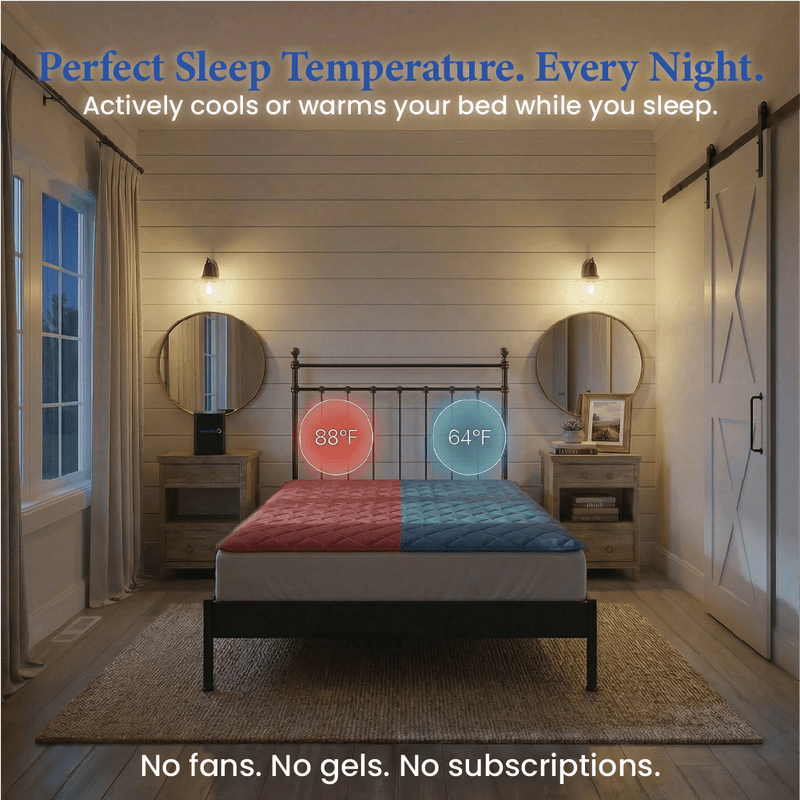
Good Sleep cooling and heating mattress topper
A water-based mattress topper that cools to 62°F and heats to 110°F and fits on top of the mattress you already have. Simple touch-panel control with no app, Wi-Fi or subscription. Dual zone on King.
Shop nowWho this guide is for
This guide is for anyone curious about deep sleep, whether you’ve noticed a low number on your sleep tracker, you wake up feeling unrefreshed, or you simply want to understand what happens while you’re asleep. It’s a starting point for everything else on this site. It isn’t medical advice. If you have ongoing sleep problems, loud snoring or severe daytime sleepiness, talk to a doctor.
Deep sleep in one sentence
Deep sleep, also called slow-wave sleep or stage N3, is the deepest stage of non-REM sleep, when brain waves become large and slow, your body is very relaxed and it’s hardest to wake you up.
The stages of sleep
Sleep isn’t one uniform state. Over the night, you move through repeating cycles made up of different stages:
| Stage | Also called | What it’s like |
|---|---|---|
| N1 | Light sleep | The transition from wakefulness; easy to wake from |
| N2 | Light sleep | Heart rate and temperature fall; makes up a large share of the night |
| N3 | Deep sleep, slow-wave sleep | Slow, large brain waves; hardest to wake from |
| REM | Rapid eye movement sleep | Vivid dreams; brain is active while most muscles are relaxed |
A full cycle typically lasts somewhere around 90 minutes, though it varies. You usually go through four to six cycles in a night.
When deep sleep happens
Deep sleep isn’t spread evenly through the night. Most of it happens in the first few cycles, in the first half of the night. Later cycles contain less deep sleep and more REM sleep.
This has practical consequences:
- Going to bed very late on a fixed wake time mostly cuts into REM-rich later sleep, but a very short night reduces everything.
- After sleep deprivation, the body tends to prioritise deep sleep on the recovery night. This is sometimes called a “rebound”.
- Long or late naps can reduce the build-up of sleep pressure, which may mean less deep sleep early in the night.
What happens in your body during deep sleep
During deep sleep:
- Your heart rate and breathing slow and become more regular.
- Blood pressure falls.
- Muscles are relaxed.
- Growth hormone is released, much of it during slow-wave sleep. Growth hormone plays a part in tissue repair and metabolism.
- Your body is harder to rouse; if woken, you may feel groggy and disoriented for a while.
These changes are part of why deep sleep is often described as restorative, though researchers are careful to note that all stages of sleep play a role in health.
What happens in your brain
In deep sleep, large groups of neurons fire in a synchronised rhythm, producing the slow, high-amplitude waves that give slow-wave sleep its name.
Research suggests deep sleep plays a role in:
- Memory. Studies suggest slow-wave sleep helps consolidate certain types of memory, particularly facts and events. See deep sleep and memory.
- Brain “housekeeping”. Animal research has suggested that the brain’s waste-clearance system may be more active during sleep. How this works in humans is still being studied, so treat bold claims with caution.
- Recovery from wakefulness. The more sleep pressure you build during the day, the more slow-wave activity tends to appear early in the night.
Deep sleep vs REM sleep
Deep sleep and REM sleep are very different. Deep sleep has slow brain waves and very little dreaming that people remember; REM sleep has active brain waves and vivid dreams. Both matter, and they seem to work together. See deep sleep vs REM sleep for a full comparison.
How much deep sleep do you need?
There’s no single precise number that applies to everyone. Deep sleep makes up a minority of the night in most adults, and the amount varies a lot between individuals and declines with age. Rather than chasing a figure, focus on getting enough total sleep and feeling rested. Our guide how much deep sleep do you need explains the evidence and the limits of tracker numbers.
How deep sleep changes with age
Children and teenagers have a lot of deep sleep. It declines through adulthood, and older adults typically get noticeably less. This is a normal part of ageing, not necessarily a sign that something is wrong. See deep sleep and age.
What helps deep sleep
You can’t force your brain into deep sleep. But you can create the conditions that support it. The habits with the most sensible evidence behind them are:
- Get enough total sleep on a regular schedule.
- Stay physically active during the day. See exercise and deep sleep.
- Keep the bedroom cool, dark and quiet. See temperature and deep sleep.
- Be careful with alcohol and caffeine. See alcohol, caffeine and deep sleep.
- Manage stress and build a calm wind-down. See stress and deep sleep.
- Treat sleep disorders. Conditions such as sleep apnea fragment sleep and can reduce deep sleep. Getting them diagnosed and treated matters.
What doesn’t reliably help
Be wary of products that promise to dramatically “boost” deep sleep. Some sound-stimulation devices and supplements have early research behind them, but results are mixed, studies are often small and many claims go well beyond the evidence. Talk to a doctor or pharmacist before trying supplements, especially if you take other medicines.
A note on sleep trackers
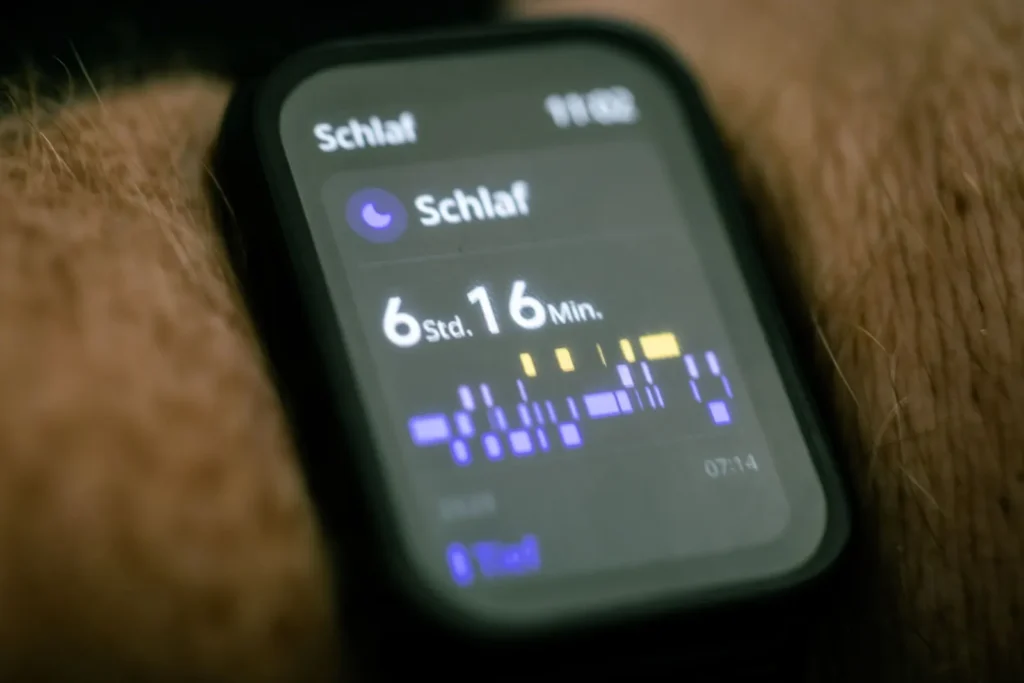
Consumer sleep trackers estimate sleep stages using movement and heart rate rather than measuring brain waves directly, as a sleep lab does. They can be useful for spotting trends, but their deep sleep numbers can be quite different from lab measurements. See sleep trackers and deep sleep.
A brief history of deep sleep research
For most of history, sleep was thought of as a single, passive state. That changed in the twentieth century, when researchers began recording brain activity during sleep using electroencephalography (EEG). They discovered that the sleeping brain is far from idle: it moves through distinct patterns over the night.
In the 1950s, researchers identified REM sleep, and over the following decades they described the stages of non-REM sleep in detail. Early classification systems split deep sleep into two stages, often called stages 3 and 4. In 2007, the American Academy of Sleep Medicine combined them into a single stage, N3, which is the system most sleep labs use today. That’s why older articles sometimes mention “stage 4 sleep”, a term you’ll rarely see in current research.
Common myths about deep sleep
“Deep sleep is the only stage that matters.” Light sleep and REM sleep also play important roles. Light sleep makes up a large share of the night and is linked with learning and memory too.
“You can hack your way to more deep sleep.” Supplements, apps and gadgets often promise this, but the evidence is generally limited. The basics, such as enough sleep, a steady schedule and exercise, are more reliable.
“Sleepwalking happens in REM sleep.” Sleepwalking and night terrors usually arise from deep sleep, not REM.
“If you wake up groggy, you didn’t get enough deep sleep.” Grogginess often comes from waking during deep sleep, not from a lack of it.
A real-world example
Imagine someone who sleeps from 1 a.m. to 7 a.m. on weekdays, has a glass or two of wine most evenings and keeps the bedroom warm. Their tracker shows little deep sleep and they feel unrefreshed. Moving bedtime earlier, keeping a steady wake time, stopping alcohol a few hours before bed and cooling the room are all simple changes that address the conditions most likely to be getting in the way. None guarantees a specific deep sleep figure, but together they give the body a much better chance.
Key takeaways
- Deep sleep is stage N3, the deepest stage of non-REM sleep, with slow, large brain waves.
- Most deep sleep happens in the first half of the night.
- It’s linked with physical recovery, growth hormone release and memory.
- Deep sleep naturally declines with age.
- Enough total sleep, a steady schedule, activity and a cool, dark room support it.
Related guides
These guides go deeper on closely related topics:
- How to Get More Deep Sleep: 10 Habits That Actually Help: ten practical habits that support deeper sleep.
- Deep Sleep and Age: How Your Sleep Changes Over a Lifetime: how deep sleep changes over a lifetime and what helps.
- Alcohol, Caffeine and Deep Sleep: What Your Evening Drinks Really Do: what evening drinks really do to your sleep stages.
- Why You Wake Up Tired Even After a Full Night’s Sleep: common reasons sleep does not feel restorative.
Each one follows the same approach: practical steps, plain language, honest about what the research does and doesn’t show, and no miracle cures.
A cool, comfortable bed helps you stay asleep through the second half of the night. For people who run hot all night, a temperature-controlled mattress pad keeps the bed itself cooler, which room temperature alone cannot always do.
Frequently asked questions
Is deep sleep the same as REM sleep?
No. Deep sleep is the deepest stage of non-REM sleep, with slow brain waves. REM sleep is a separate stage linked with vivid dreaming and an active brain.
Can you get too much deep sleep?
In healthy people, the body regulates deep sleep itself, and it isn’t something people generally need to worry about getting too much of. Increased deep sleep often follows a period of sleep loss.
Why do I feel groggy when woken from deep sleep?
Waking from deep sleep causes sleep inertia, a period of grogginess and slowed thinking that can last a while. Waking from lighter stages usually feels easier.
Do I dream in deep sleep?
Dreaming can occur in all stages, but the vivid, story-like dreams people usually remember are most associated with REM sleep.
Can I increase my deep sleep?
You can support it with enough total sleep, a regular schedule, exercise, a cool bedroom and less alcohol near bedtime. Treating sleep disorders such as sleep apnea can also help.